


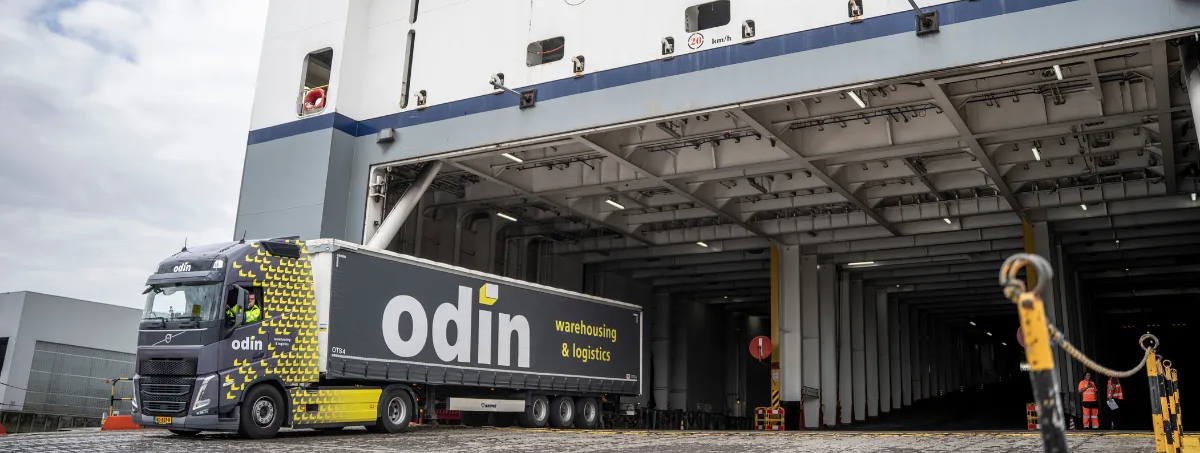
ODIN Warehousing & Logistics has announced the launch of ODIN Transport & Shipping UK Ltd in Immingham, adding between 50 and 100 trailers to the ferry business it acquired in January. It matters because ODIN is scaling a business it only integrated eight months ago rather than pausing to consolidate, betting that UK-Europe freight demand justifies expanding capacity well ahead of proven volume.
ODIN Warehousing & Logistics is a Rotterdam-based logistics provider operating from the Port of Rotterdam with additional facilities in Poland and representation in Asia, offering warehousing, customs handling, ocean freight and European distribution services.
Welton North Sea Trailers is a UK ferry transport specialist that became part of ODIN from 1 January 2026, previously operating a fleet of 30 tautliners between the UK and continental Europe.
The planned 50 to 100 trailer addition would take the combined UK fleet to between roughly 80 and 130 units, between 2.7 and 4.3 times Welton's previously stated fleet size, if the existing Welton fleet forms the base of the enlarged operation.
ODIN Transport & Shipping UK will handle transport planning, local customer contacts and customs coordination in Britain, while also developing return loads from the Immingham area to reduce empty running on the return leg.
ODIN chief financial officer Joeri Galas said: "By also having our own organisation in the United Kingdom, we can respond faster, better control quality and offer customers a single point of contact for the entire journey."
ODIN said it selected Immingham for its role as a gateway for freight flows between the UK and north-western Europe and its existing connections to Rotterdam and the wider Benelux region.
Raymond Kleij, previously associated with Welton and now involved in the enlarged operation's planning, said the business would serve customers in both the UK and Ireland, extending its reach beyond Welton's prior geographic scope.
For the sector, integrating an acquired UK operator's fleet and team before scaling capacity, rather than replacing them outright, signals that continental freight groups increasingly value retained local operational knowledge over a clean-slate market entry.
Source: trans.info / Motor Transport / DataPortuaria








.png)
